
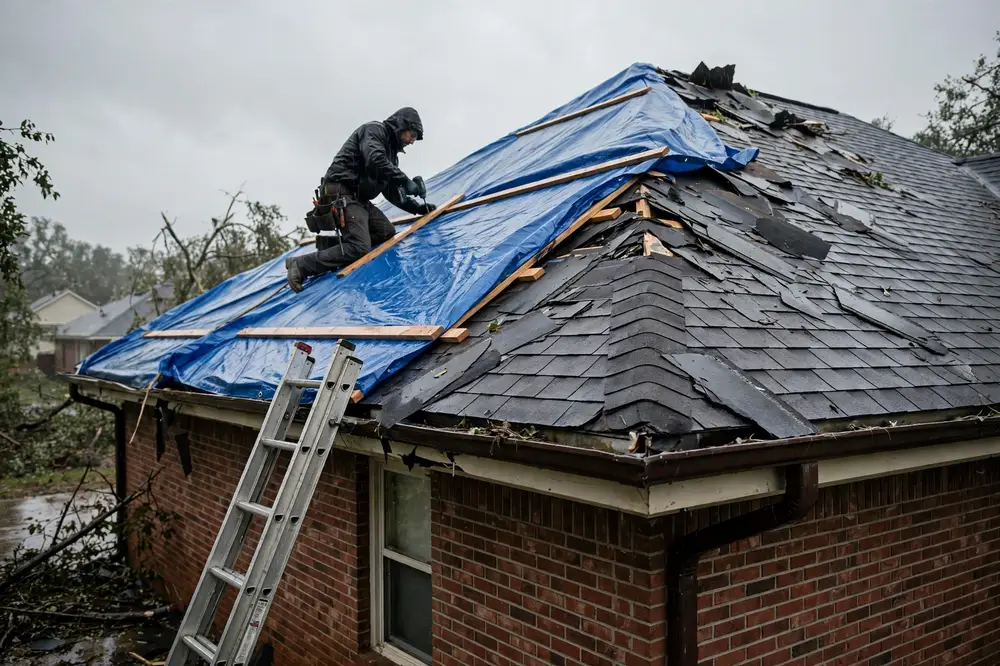
Open 24 hours, every day — stop the water first, repair it properly second
Emergency roof repair Dallas TX when water is coming through
When water is coming through the ceiling, the order of work matters: make the roof watertight first, protect the interior, and only then make the permanent repair. That is how emergency roof repair in Dallas works — a tarp and a plan tonight, a proper repair when the roof is dry enough to hold it.
Open 24 hours, every dayCall (469) 960-7533Tarp first, repair second
What's included
What an emergency call includes
An emergency call is two jobs in order: make the roof watertight now, and repair it properly when the roof is dry. Both are included in the call, and the permanent repair is scoped in writing once the full damage is visible.
Tarping that holds
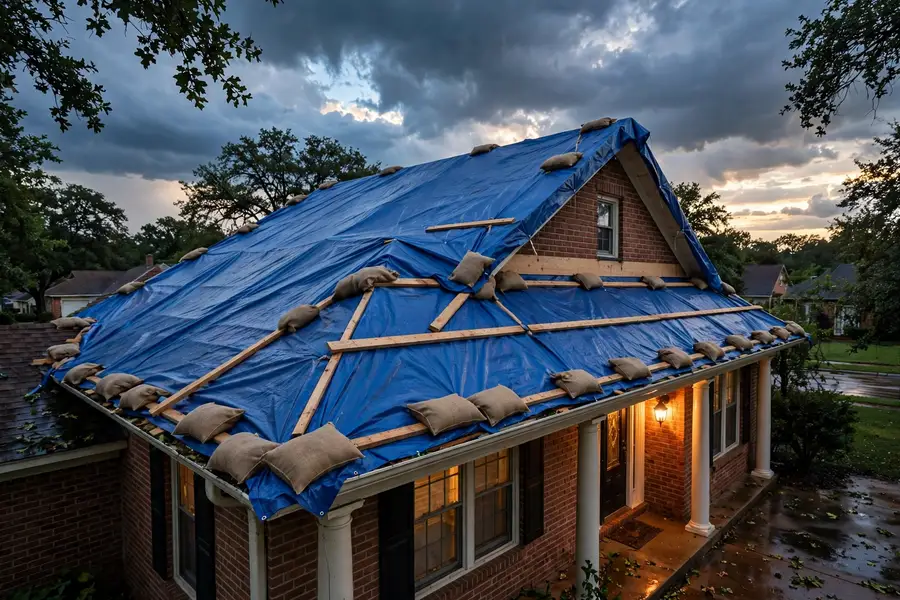
Heavy tarps battened and fastened over the damaged section, so the roof is watertight through wind and rain until the permanent repair can be made.
Interior protection
The wet area is protected and the water path is traced, so the damage to ceilings, insulation and contents is limited while the roof is covered.
Damage traced, not guessed
The opening is found, the decking around it is checked, and the water path inside is mapped. The repair scope follows the damage, not the stain.
Structural check after impact
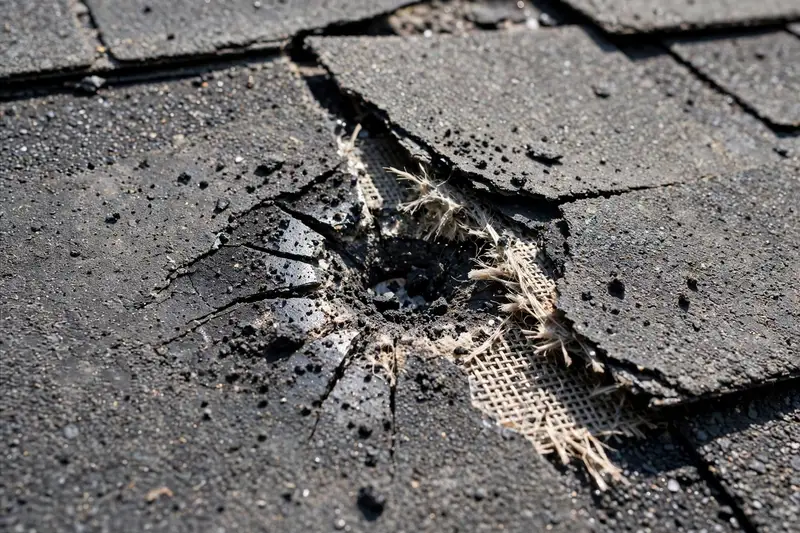
After a tree or limb strike, the rafters and decking around the impact are checked before any repair is made. A repair over damaged structure is not a repair.
Permanent repair, properly timed
The permanent repair waits for a dry roof and a dry deck, because a repair made wet will not hold. When it is made, it is built to the same standard as a new roof.
Documented throughout
Photos of the damage, the tarp, and the finished repair, so you have a complete record of what happened and what was done.
Service overview
What emergency roof repair in Dallas actually involves
Emergency roof repair in Dallas is the response to a roof that has failed right now: storm damage, a tree through the slope, a ridge torn off, or a leak that has found its way into a living room. The work starts with stopping the water and ends with a permanent repair, made properly, when the roof is dry.
The first job is to stop the water. A tarp over the damaged section, battens holding it, and the interior protected — then the proper repair when the roof is dry enough to work on. We do not climb a wet, damaged roof in a storm to make a repair that will not hold; we make it watertight first and repair it properly second. Read the emergency first-steps guide on our blog.
How we workWe verify the cause, compare realistic options, and confirm the work before we leave.
The service timeline
What to expect on an emergency call
The order is the same on every emergency job, whatever the damage.
Call
You tell us where the water is coming in and what happened — storm, tree, wind. We talk through what is safe to do until we get there: move valuables, bucket under the drip, stay off the roof.
Make it watertight
We cover the damaged section with a tarp, battened and fastened so it holds, and protect the interior. If the ceiling is sagging with water, we talk through that before anything else.
Assess
Once the roof is covered, we trace the damage: the opening, the decking around it, and how far the water has travelled inside. You get photos and a straight account of what the roof needs.
Permanent repair
When the roof is dry enough for the repair to hold, we rebuild the damaged section — decking, underlayment, flashing and field — to the same standard as a new roof.
Cleanup and walkthrough
The tarp comes down, the repair is photographed, the debris is hauled off, and a magnet sweep runs below the work area. You see the finished work before we leave.
Tools & methods
Tools and methods we use on an emergency
The emergency kit is different from the standard one — it is built for stopping water fast, in the dark and in the rain.
Heavy tarps and battens
Covers a damaged section fast and holds it through wind and rain until the proper repair can be made.
Roofing nails and cap fasteners
Secures the tarp and the repair so the cover stays put in the next gust, not just the first one.
Moisture meter
Finds how far the water has travelled in the decking and insulation, so the repair covers the damage, not just the hole.
Headlamp and inspection camera
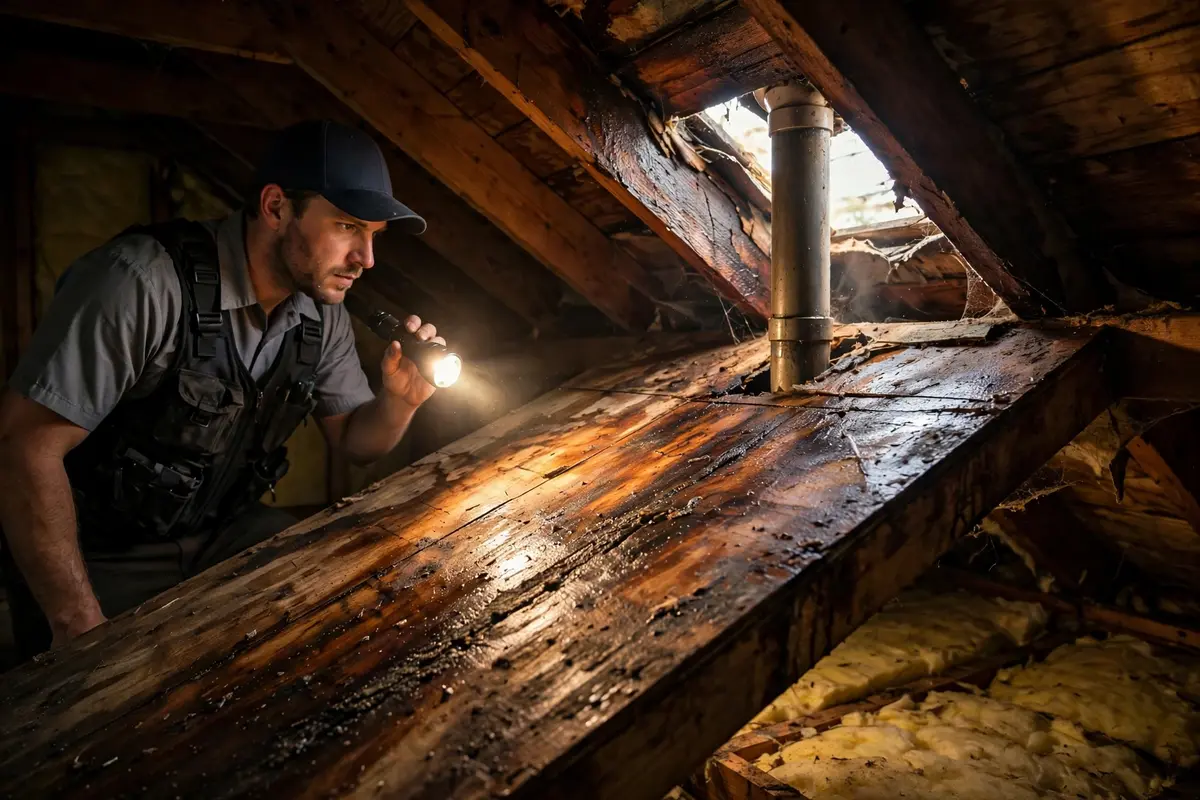
Lets the crew see the decking and the leak path in a dark attic or a night call-out, where a flashlight is not enough.
Fall protection harness
Keeps the crew tied off on a wet, steep roof — which is exactly when the protection matters most.
Roofing cement and patches
Seals the puncture or the lifted course under the tarp, so the temporary cover holds until the permanent repair is made.
Leak path tracing
Traces the water path from the attic and the roof, so the tarp goes over the entry point and not just the stain.
Use cases
When Dallas homeowners call us in an emergency
These examples show the order of an emergency job: stop the water first, repair it properly second.
Ridge blown off in Oak Cliff
A section of ridge cap torn away in a straight-line wind event, with rain coming in along the peak. Tarped the same call-out, then the ridge rebuilt with new caps and the course below re-sealed once the weather cleared.
Leak over a garage in Lakewood
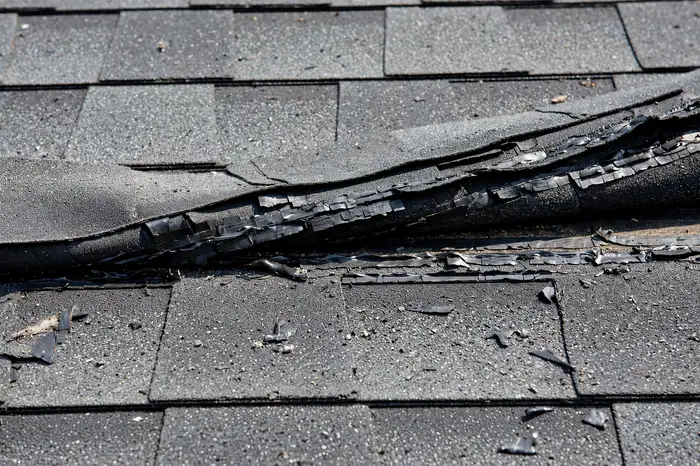
Water pouring through a garage ceiling during a heavy rain cell. The cause was a failed valley liner. Temporary cover over the valley, then the liner replaced and the shingles re-cut along both edges.
Problems we solve
Problems an emergency visit solves
Most emergency calls are one of these four. The answer is the same in each: stop the water, then repair it properly.
Water coming through the ceiling
Tarp the opening, protect the interior, and trace the entry point so the repair lands on the cause, not the stain.
Tree or limb through the roof
Cover the opening, check the decking and rafters around the impact, and rebuild the section once the structure is sound.
Ridge torn off in wind
Cover the peak, then rebuild the ridge with new caps and re-seal the course below, checking the rest of the ridge for the same lift.
Leak that will not wait for dry weather
If the roof is too wet to repair properly, we make it watertight and return when a permanent repair will hold.
Cost factors
What shapes the cost of emergency roof repair in Dallas
THE DAMAGE, THE SIZE OF THE COVER, AND THE REPAIR AFTER
Extent of the damage
A small torn section takes a small tarp and a short repair. A large opening, or damage across several slopes, takes more cover and more work to rebuild.
What the tarp must hold
A tarp that has to ride out wind and rain until a dry day needs battens and proper fastening, not just weight. The cover is sized to the opening and the forecast.
The permanent repair
The emergency visit makes the roof watertight. The permanent repair — shingles, flashing, decking — is scoped separately once the full damage is visible, and listed in its own written scope.
Customer reviews
What Dallas customers say
★★★★★
“I found the leak over the weekend and called on Monday. To my surprise, Raymond was able to come out that same day to inspect the roof and give me a quote.”
What should I do right now if my roof is leaking?
If water is coming in, call now on (469) 960-7533. While you wait: move furniture and valuables out of the wet area, put a bucket under the drip, and if you can do so safely from inside, place a towel or a container where the water lands. Do not climb on a wet or damaged roof — that is the part that waits for us.
How long does an emergency tarp stay on?
It depends on the size of the damaged area and the weather. A tarp over the damaged section is the standard first step, and it stays in place until the roof is dry enough for the proper repair. We do not remove a tarp to make a repair that will fail in the rain.
Does the emergency visit include the full repair?
No. An emergency call covers making the roof watertight and protecting the interior. The permanent repair is scoped separately once the roof is dry and the full extent of the damage is visible, and you see that written scope before the work starts.
Are you really available at night and on weekends?
We are open 24 hours, every day. Call (469) 960-7533 and tell us what has happened — where the water is coming in, whether a tree is involved, and whether the ceiling is sagging. We will talk through what is safe to do until we get there.
Related services
Other roofing services we handle
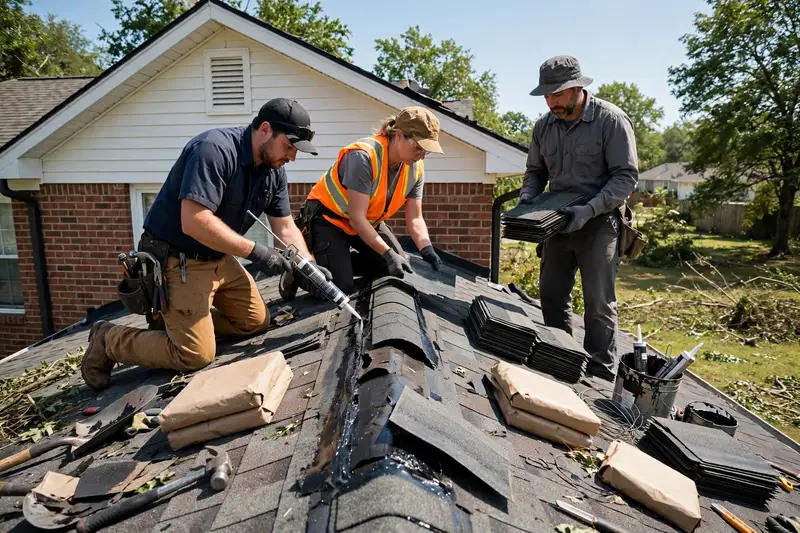
Storm Damage Roof Repair
After a storm, the damage is often wider than the leak. We inspect every slope and document the damage so the record is complete.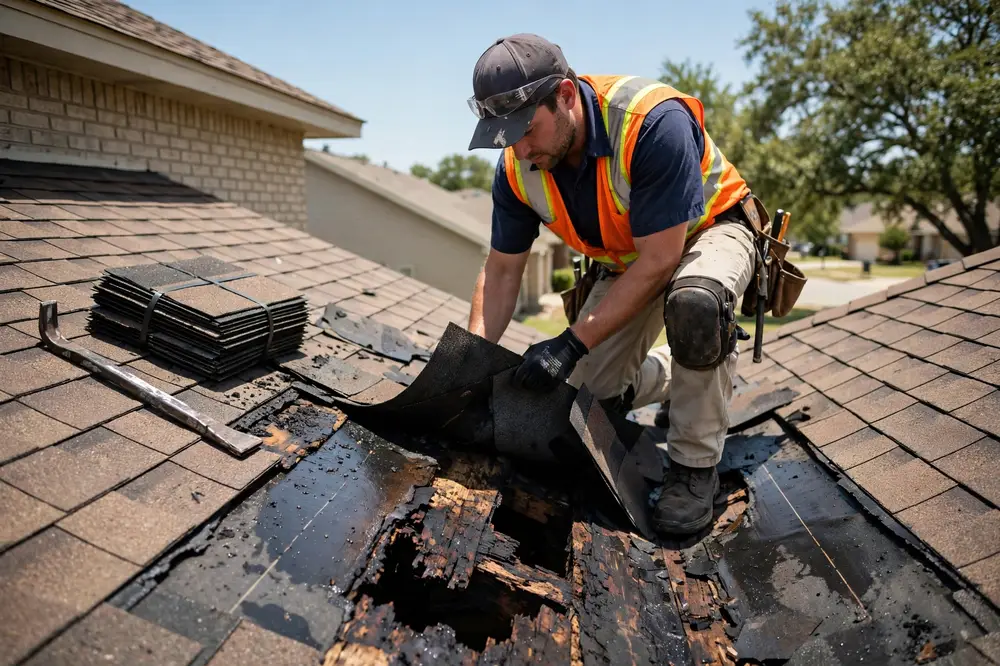
Leak Detection and Repair
When the stain is there but the source is not obvious, we trace the water from the attic and the roof until the entry point is found.
Roof Repair
When the damage is isolated to a valley, a boot, or a small hail field, we repair it and tell you honestly how much life the rest of the roof has left.Ready when you are
Get emergency roof repair Dallas TX now
Call (469) 960-7533. We are open 24 hours, every day. Tell us where the water is coming in and we will talk through what to do next.
Talk with the local team
Request Emergency Roof Repair
Call us at (469) 960-7533 now. We are open 24 hours, every day. Tell us where the water is coming in and what happened, and we will talk through what to do until we get there.